



Table of Contents
ToggleIntroduction: The Unexpected Plot Twist
(AKA “Wait—how did I end up in a soap opera?”)
Let me paint the scene for you.
It’s a Friday night. We’re at this rooftop bar with soft lighting, overpriced cocktails, and the kind of vibe that makes you think, “Yeah, this might go somewhere.”
She’s smart. Funny. The banter’s flowing. I’m thinking, Okay, this is solid—finally, a date that doesn’t feel like an awkward LinkedIn interview disguised as dinner.
And then, just as I’m mentally high-fiving myself for not screwing this up… she drops it.
No warning. No build-up. Just casually, between sips of her drink:
“So I’m technically still kinda seeing my ex… but it’s complicated.”
I blinked. Smiled like my brain wasn’t screaming.
I nodded like I understood, even though a part of me wanted to shout, “Why am I sitting here like a side character in your emotional drama arc?”
That moment? It wasn’t just awkward. It was a pattern.
And as I rode home in silence, I started asking myself a question I probably should’ve asked a long time ago:
“Why does this keep happening?”
Why does it feel like every time I get close to something real, I end up pulled into some emotional telenovela I didn’t audition for?
Was I attracting drama? Was I ignoring red flags? Or was I just out here, unknowingly walking into emotional booby traps?
The Pattern You Don’t Notice at First
At first, you brush it off.
You think, “Okay, that was just one bad experience.”
Then it happens again. And again. Different faces, different names—but the same underlying energy.
- First, it’s the girl who’s still “figuring things out” with her ex.
- Then it’s the one who needs you to “fix” her last relationship trauma.
- And then comes the one who’s already playing games on date two—ghosting, coming back, dropping emotional bombs out of nowhere like you’re dating a soap opera scriptwriter.
It stops being fun, and starts feeling like emotional roulette.
And that’s when it hits you:
This isn’t bad luck.
This is a pattern.
And patterns don’t happen by accident.
The Real Question: Why Does This Keep Showing Up?
Here’s the uncomfortable truth I had to sit with:
You don’t attract what you want.
You attract what you tolerate.
Somewhere along the line, I’d made it okay—whether consciously or not—for women to bring chaos into the conversation.
I’d confuse intensity with chemistry. Drama with passion. Emotional unpredictability with “something real.”
And the truth?
It wasn’t just them.
It was me, too.
My own lack of boundaries. My own desire to be liked so badly that I ignored the red flags waving right in my face.
This Blog? It’s the Wake-Up Call
That moment on the rooftop wasn’t just another bad date.
It was the moment I realized: I’d been playing the game all wrong.
So this blog isn’t just about why women seem to love drama.
It’s about why we get pulled into it, what it actually means, and most importantly—how to stop being a supporting actor in someone else’s emotional circus.
Because the goal isn’t to decode chaos.
The goal is to stop inviting it to dinner.
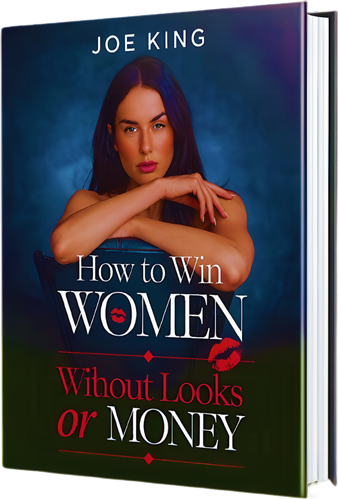
Get Your FREE Copy of
How to Win Women Without Looks or Money
- The no-fluff guide to mastering confidence & connection
- Proven strategies to attract without chasing
- Exclusive content you won’t find anywhere else
Chapter 1: The Allure of Drama
(Why Chaos Sometimes Feels Like Chemistry)
Let’s stop pretending for a second and be honest: drama is kind of intoxicating.
There’s something about it that pulls you in. The tension. The unpredictability. The highs so high that you ignore the lows, because when things are good, they’re electric.
Drama in dating is like ordering spicy food you know you can’t handle. Your mouth’s on fire, your stomach’s screaming for help, but you keep going back because damn, the flavor hits.
But why? Why are so many people — especially in early dating — drawn to this emotional chaos?
Let’s break it down.
The Emotional High
Here’s the thing about drama: it gives you instant intensity.
In a world where most modern dating is flat, fast, and flaky, drama feels like something real. The emotional rollercoaster creates peaks and valleys that mimic depth—even if there’s none.
- When she storms out and then texts, “I’m sorry. I just care a lot,” it feels like passion.
- When he disappears for two days and comes back with a deep, late-night confession, it feels like vulnerability.
- When there’s a fight followed by a fiery makeup moment, it feels like love.
But here’s the trap: emotion ≠ connection.
Just because your heart is pounding doesn’t mean it’s healthy. A panic attack feels intense, too—but you wouldn’t call that romance.
Drama creates a chemical cocktail—dopamine, cortisol, adrenaline—that mimics deep emotional bonds. It feels addictively real, even when it’s just reactive chaos.
It’s like trying to build a house during a thunderstorm. Sure, it’s dramatic. But good luck making it last.
Testing Boundaries
(Drama is also a test—just not the kind you want to pass)
Here’s a dynamic that’s rarely talked about:
Some people create conflict not because they enjoy the fight, but because they want to test how much you care.
- If they start drama and you chase them, they think: “Okay, he’s invested.”
- If they pull away and you chase harder, they think: “I have control.”
- If they start a fight and you work to fix it, they think: “I can trust him to stay.”
But here’s the danger:
Drama becomes the currency of connection.
Instead of communicating directly, it becomes a game:
- “How much can I push before he walks away?”
- “If I go cold, will she come running?”
- “If I act jealous, will he try harder?”
This turns love into a series of stress tests.
And the problem with that?
Eventually, someone breaks. Not because they stopped caring—but because they got tired of proving it through pain.
Why This Matters So Much
If you don’t understand the allure of drama, you’ll keep mistaking chaos for chemistry.
You’ll stay stuck in situations that feel intense but go nowhere.
And worst of all?
You’ll think something’s wrong with you—when the truth is, the whole dynamic was built on emotional landmines from the start.
The Bottom Line?
Drama might feel good in the moment.
It might make things exciting, passionate, intense.
But excitement isn’t the same as stability.
And intensity isn’t the same as intimacy.
Real connection doesn’t come from testing people—it comes from trusting them.
And when you get that?
You stop chasing rollercoasters and start building something that actually lasts.
Chapter 2: The Downside of Drama
(What Feels Thrilling at First Will Eventually Drain You)
Drama might hook you fast. It’s wild. Addictive. Seductive.
But here’s the harsh truth no one tells you until you’re knee-deep in it:
The same drama that made things exciting in the beginning… is the same thing that will quietly destroy the relationship from the inside out.
It doesn’t start with something huge. It’s subtle.
You go from butterflies to burnout, and by the time you realize what’s happening, you’re emotionally exhausted, confused, and questioning your own sanity.
Let’s break down why drama doesn’t just feel bad long-term—it is bad long-term.
Emotional Exhaustion
(The Cost of Constant Conflict)
You ever date someone where every conversation feels like walking a tightrope?
- One wrong word, and suddenly she’s distant.
- One missed call, and now there’s a whole narrative about how you don’t care.
- One night out with your friends, and you’re the villain in her Instagram story.
That’s not love. That’s emotional hostage-taking.
And the cost?
You start shrinking. You start editing your words. You stop being yourself—because every moment is spent trying to avoid the next blow-up.
You’re not building a relationship anymore.
You’re surviving one.
That slow erosion of peace? That’s exhaustion. It wears down your self-esteem, your energy, and your ability to be emotionally present in the relationship.
Love should feel light. Drama makes it feel like labor.
The Erosion of Trust

(Because Predictability Is What Makes People Feel Safe)
Here’s what drama does over time: it replaces certainty with chaos.
When someone’s constantly switching between hot and cold, loving and distant, available and unreachable—it’s impossible to build trust.
Trust requires:
- Consistency.
- Emotional safety.
- Predictability—not in a boring way, but in a secure way.
When there’s drama every other day, your nervous system never relaxes. And eventually, you start anticipating betrayal even in moments of calm.
It’s not just exhausting—it’s toxic.
Because without trust, you’re not building a bond—you’re managing a threat.
Drama Warps Reality
(You Start Mistaking Survival for Connection)
This one’s big—and most people don’t catch it until it’s too late.
When you’re deep in a dramatic relationship, your entire sense of normal starts to shift.
You start thinking:
- “Fighting means we’re passionate.”
- “At least they care enough to argue.
- “We always make up after… so it’s okay, right?”
No. It’s not okay.
That’s not chemistry. That’s trauma bonding.
It’s the cycle of tension → conflict → relief → repeat.
And once your brain starts connecting relief with love, you’re stuck in an emotional loop that’s hard to break.
It’s not love. It’s addiction.
The Dagger of Uncertainty
(When You Never Know Where You Stand)
Here’s what no one says out loud:
Uncertainty might feel exciting in the short term—but in the long term, it kills connection.
You can’t build something real when you’re always unsure:
- Will she be affectionate tonight or cold?
- Will this be a fun night out or an emotional landmine?
- Is she into you, or just stringing you along for attention?
That constant second-guessing erodes your ability to relax into the relationship.
And relaxation is what lets real connection grow.
Without that?
You’re just trying to survive another emotional episode.
Final Words on Drama
Listen, I get it. I’ve been there.
Drama is seductive. It feels like passion. But passion without peace? That’s a ticking time bomb.
The truth is:
If love costs your peace, your presence, and your emotional health—it’s too expensive.
You don’t have to settle for rollercoaster relationships.
There’s more out there. Way more.
The kind of connection where you don’t have to earn love through chaos.
The kind where consistency is the flex.
The kind where drama isn’t needed just to feel something.
That kind?
That’s the one worth waiting for.
🧠 This isn’t just a blog—it’s a battle plan.
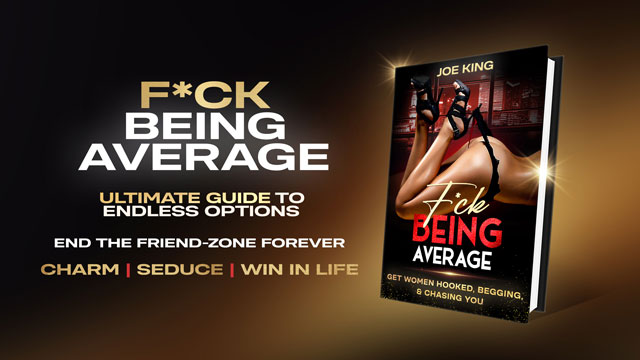
F*ck Being Average is a brutally honest guide for men who are tired of dating chaos and emotional games.
You’ll learn how to stop chasing drama, set boundaries, and finally attract real connection.
💥 Get it now with 50% off — use code LAUNCH50
👉 https://selfsuccesssaga.gumroad.com/l/fck-being-average
Chapter 3: Recognizing the Signs (Before You Get Played)
(Because the red flags were there… they just wore lipstick and said “I’m fine.”)
Let’s be honest—most of us don’t get played by surprise.
We ignore signs.
We excuse behavior.
We hope the good moments outweigh the bad ones.
But here’s the truth no one tells you when you’re in it: getting played doesn’t start with betrayal. It starts with tolerating confusion.
When you’re emotionally invested, it’s easy to blur the lines between passion and manipulation. So, to help you step back and see clearly, here are some of the most common drama-fueled behaviors that signal you might be headed into “played” territory.
Inconsistent Behavior
(Hot and cold isn’t mystery—it’s manipulation)
One day she’s blowing up your phone. Next day? Radio silence.
She says she’s into you—but keeps you at arm’s length.
That emotional yo-yo creates a craving for her attention, which tricks your brain into chasing. You think, “Maybe if I just do this one thing differently, she’ll stay warm.”
Wrong.
Consistency is clarity. Inconsistency is confusion. And confusion isn’t romantic—it’s destabilizing.
If someone wants to be in your life, they won’t make you guess.
The Subtle Power Plays
(If you’re always the one adjusting, there’s a problem)
Watch for signs like:
- She always sets the plans, cancels them last minute, and never apologizes.
- You find yourself walking on eggshells not to “set her off.”
- She flirts… but only when you pull away or show interest elsewhere.
These aren’t random. They’re control tactics.
Drama becomes the tool she uses to control emotional availability.
The goal? To make you feel like you’re chasing her approval—even when she’s not offering anything solid.
Guilt-Tripping and Passive Aggression

(The moment you feel like the bad guy—for setting boundaries)
She flips the script when you ask for clarity:
- “Wow, I didn’t think you’d be so needy.”
- “You’re overthinking everything.”
- “Why are you making this a big deal?”
Sound familiar?
This is classic deflection. Instead of owning her behavior, she makes you question your own.
And the second you internalize that guilt? She wins.
You start lowering your standards just to avoid conflict.
If someone makes you feel bad for communicating your needs, they’re not confused—they’re calculated.
The “Half In, Half Out” Dynamic
(The soft ghosting that keeps you around, just in case)
She doesn’t disappear completely. That would be too obvious.
Instead, she leaves just enough breadcrumb texts, “likes” your stories, or drops a flirty DM once a week to stay on your radar.
Why?
Because it keeps you emotionally hooked without ever committing.
And you—wanting closure, clarity, or just something—cling to those crumbs, convincing yourself they mean something.
But here’s the harsh truth:
Real interest is loud.
Mixed signals are the message.
You Feel More Confused Than Confident
This is the ultimate litmus test.
A healthy connection brings peace.
A toxic one brings overthinking.
If you find yourself:
- Replaying conversations in your head…
- Second-guessing your every text…
- Constantly trying to “figure her out”…
That’s not connection. That’s chaos.
And if you have to decode someone’s behavior just to feel okay?
You’re not dating. You’re trying to solve a puzzle that doesn’t want to be solved.
So… What Do You Do When You See the Signs?
Simple.
You don’t try to fix her.
You don’t wait for her to “come around.”
You step back—and get clear on your boundaries.
Because you’re not here to prove your worth to someone who thrives on confusion.
You’re here to protect your peace.
And recognizing the signs early? That’s your superpower.
Chapter 4: Strategies to Avoid Getting Played

(Because you’re not here to be someone’s emotional punching bag)
By this point, if you’ve been nodding along thinking, “Damn, I’ve lived this,”—welcome to the club. We’ve all had our “how did I not see that coming?” moments.
But the real flex isn’t staying bitter. It’s getting smarter.
You don’t avoid getting played by trying to outsmart manipulative behavior.
You avoid it by showing up in a way that naturally repels the kind of energy that thrives on drama.
Here’s how.
Set Boundaries Early (and Stick to Them)
(Don’t let “chill guy” energy cost you your self-respect)
One of the easiest ways to get played is by being the guy who tolerates everything just to avoid rocking the boat.
- She cancels last minute—no problem.
- She disappears for three days—“Hey, hope you’re okay 🙂”
- She gives bare-minimum effort—you keep giving max.
No.
You’re not being kind. You’re being avoidant.
Boundaries aren’t about controlling others. They’re about controlling yourself.
Set standards for how you expect to be treated. Not because you’re entitled—but because you’ve earned it.
Match Energy, Don’t Overextend
(Attraction is a dance, not a chase)
Early on, it’s easy to fall into the trap of trying to prove you’re the “better guy.” Especially if she’s been hurt before or drops subtle hints like, “Most guys just don’t get me.”
You think, “I’ll show her I’m different.”
So you over-text.
Over-share.
Over-invest.
But the second your effort outpaces hers consistently?
You shift the dynamic from mutual to needy.
Instead: mirror her energy.
- If she’s engaged, be engaged.
- If she pulls back, pull back.
- If she plays games, you leave the game entirely.
Matching energy keeps the dynamic balanced.
It says, “I’m interested, but I respect myself too much to chase.”
Say What You Want (Early)
(Clarity scares away chaos)
A lot of guys avoid saying what they want because they’re afraid of “scaring her off.”
Let me say this loud:
If honesty scares her off, she wasn’t emotionally safe in the first place.
When you lead with clear intent:
- “I’m not here for games.”
- “I’m looking to build something real, not entertain drama.”
- “If we vibe, great. If not, no hard feelings.”
You filter out the flaky. The avoidant. The confused.
You save your time. And hers.
That’s leadership. That’s clarity. That’s attractive.
Detach from the Outcome
(Because control is the enemy of confidence)
Most drama in dating comes from one place: attachment to outcome.
You meet someone. You like the potential. You build the fantasy.
And now you need it to work.
So you ignore red flags.
You tolerate confusion.
You chase moments of validation like it’s emotional crack.
But here’s the truth:
You don’t need her to choose you.
You need to choose yourself.
Confidence isn’t “I always win.”
It’s “I’ll be good, no matter what.”
When you truly detach from needing a specific outcome?
You stop performing.
You stop overthinking.
You start attracting what’s meant for you—because you’ve stopped settling for what’s not.
Audit Your Own Emotional Patterns
(Sometimes, drama doesn’t find you. You find it.)
Hard pill to swallow: if drama keeps showing up in your dating life, it’s probably not just bad luck.
Ask yourself:
- Do I confuse unpredictability with passion?
- Do I overlook early red flags because I want connection so badly?
- Do I mistake emotional intensity for emotional intimacy?
If the answer is yes, cool. That’s awareness. That’s the first step to shifting your entire dating life.
You attract what you’re aligned with.
Change your patterns, and your experiences change with them.
In Short? Stop Playing Checkers with People Who Are Playing Chess
Every time you ignore a red flag, explain away confusion, or chase clarity from someone who thrives on drama—you hand over your peace.
But you don’t have to keep doing that.
Because you?
You’re the guy who’s done being played.
You’re building something bigger now—peace, clarity, purpose, and real connection.
And drama?
Drama’s not invited.
Chapter 5: Final Thoughts
(Because peace > performance. Every time.)
If you’ve read this far, let’s be real—you’re not here just to complain about women or point fingers at every girl who flaked, ghosted, or spun you in emotional circles.
You’re here because something in you is done with the game.
You’re not interested in drama that feels exciting but leaves you drained.
You’re not here for temporary highs followed by emotional crashes.
You want something real. Solid. Clear.
And to get that? You don’t need to chase harder.
You need to shift your entire approach.
Here’s What to Take With You:
- Drama isn’t love.
- Intensity doesn’t equal depth.
- If it’s hard before it even starts, it’s not going to get easier.
- Emotional chaos is not a rite of passage—it’s a red flag.
And most importantly?
If peace feels boring to you, you’ve been conditioned by dysfunction.
Because the guy who chases drama isn’t chasing connection.
He’s chasing adrenaline.
He’s chasing validation.
He’s chasing what he thinks love is supposed to feel like.
But love?
Real love is safe.
It’s calm.
It’s consistent.
It doesn’t need explosions to feel alive.
The Final Shift
You don’t become more attractive by playing the game better.
You become more attractive by not needing to play it at all.
By living a life you’re proud of.
By setting boundaries and sticking to them.
By valuing your peace more than the thrill of unpredictability.
You don’t get played when you stop handing your energy to people who haven’t earned it.
You don’t get ghosted when you stop chasing attention.
You don’t get burned when you stop standing too close to the fire just because it’s warm.
You get something better:
Freedom. Confidence. Clarity.
And eventually, the kind of relationship that doesn’t make you question your worth.
The strongest men don’t chase drama—they walk away from confusion and protect their peace like it’s sacred.
You made it to the end.
Not just of this blog—but maybe, finally, of that chapter where you kept attracting chaos.
What comes next?
That’s up to you.
But I hope it’s quieter.
Simpler.
And way more powerful.
Done playing the side character in someone else’s drama?
F*ck Being Average is your wake-up call and your manual.
No fluff. No sugarcoating. Just straight-up clarity on how to stop tolerating chaos and start leading your own story.
🎯 Grab your copy now — 50% off with code LAUNCH50
👉 https://selfsuccesssaga.gumroad.com/l/fck-being-average

F*ck Being Average
Ultimate Guide To Endless Options
OUT NOW
End The Friend-Zone Forever
Charm | Seduce | Win In Life
